

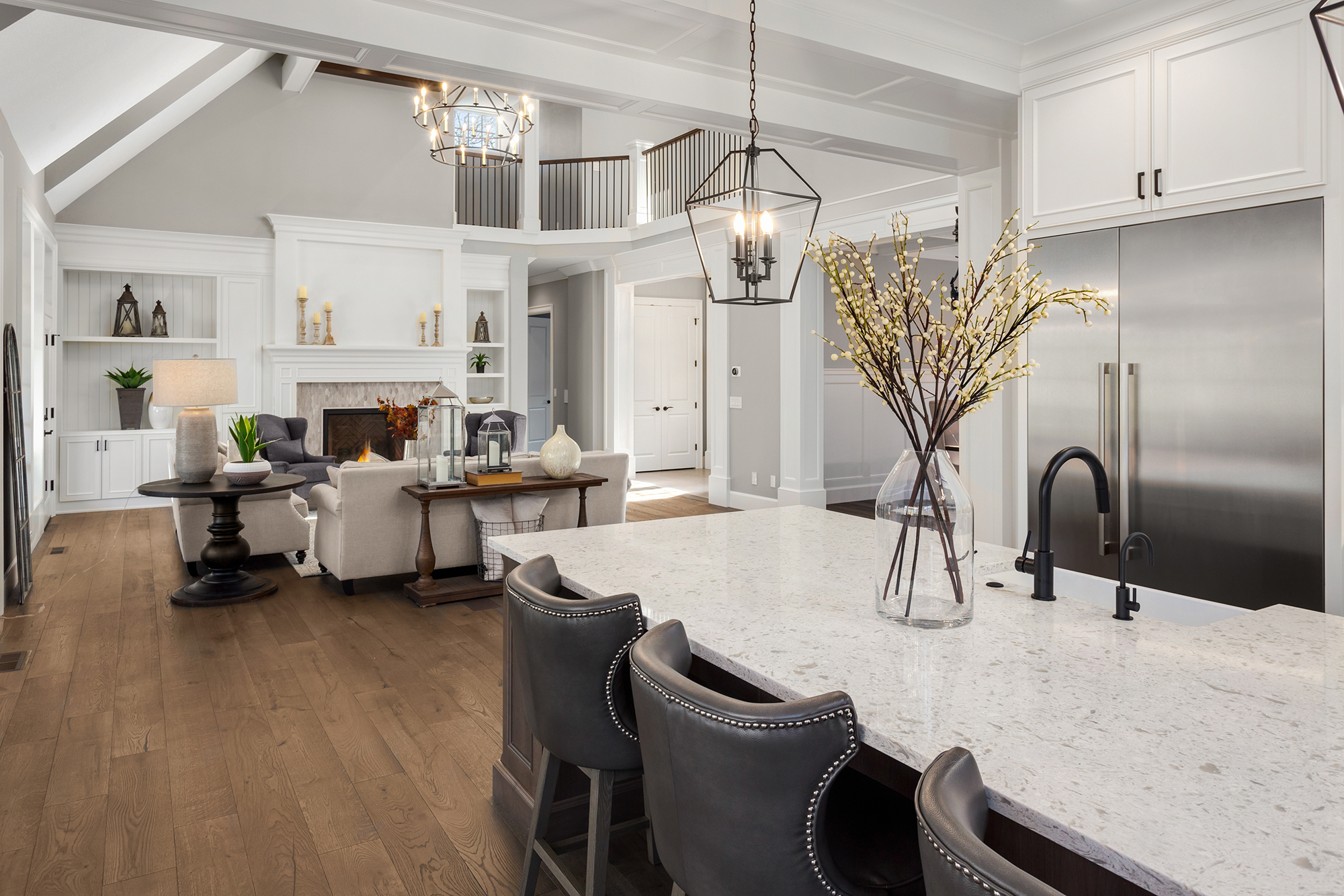
Historic properties near the Georgetown Square rest on crawl spaces and wood framing systems that react continuously to seasonal weather changes. Your older floor plan faces unique movement patterns as Central Texas clay soils swell during spring rains and shrink during dry summer heat waves.
Floating wide-plank laminate gives your historic home a stable, continuous surface that adapts to natural structural movement. Modern engineered plank cores bridge uneven wood spans and deaden footfall noise, giving you the authentic timber proportions of early Texas construction without permanent damage to your original floor framework.
Structural Movement in Older Georgetown Foundations
Homes built decades ago throughout Central Texas rely on wood perimeter beams and interior concrete or cedar piers. Pier-and-beam foundations allow ambient moisture to cycle beneath your living spaces, causing framing joists to expand and contract across different seasons.
Clay soil shifts beneath the piers often produce slight foundation settlement across opposite corners of the house. Rigid, brittle materials like large-format ceramic tile crack along grout joints under that continuous subfloor movement, while site-finished solid hardwoods pull apart or pinch tightly together along nail lines.
Floating wide-plank laminate uses mechanical click-lock joints that lock boards to one another rather than fastening directly to your subfloor. The entire floor functions as a unified, independent surface that moves freely over changing subfloors without pulling away from perimeter walls or popping loose underfoot.
Professional Subfloor Prep Over Aged Wood Framing
A durable installation over older crawl spaces depends entirely on proper subfloor stabilization before planks snap together. Laying new materials over loose, uneven subfloor boards results in hollow sounds, joint strain, and persistent squeaks.
Our professional installation crews follow specific stabilization steps across historic Georgetown renovations.
Joist Deflection and Subfloor Fastening
Technicians walk your entire floor plan to locate sagging spans, rotted plank sections, and loose subfloor nails. Installers screw down original tongue-and-groove subfloor boards directly into underlying joists to eliminate friction squeaks before laying the finished surface. Uneven plank edges get planed flat so your new floating floor rests on a stable, uniform plane across every threshold. Experienced crews identify structural deflection early, ensuring your floor receives the correct perimeter expansion gaps to breathe through hot, dry summers.
Heavy-Duty High-Density Fiberboard Underlayment
Specialized acoustic underlayment rolls out directly over your leveled wood subfloor to deaden the hollow sound of footsteps in tall-ceiling rooms. Dense closed-cell foam smooths out minor ridges between old wood subfloor planks without creating a squishy, unstable walk. The underlayment material absorbs daily impact shock, protecting the precision tongue-and-groove joints from bending stress as family members walk through heavy-traffic hallways. Built-in moisture protection stops humid air rising from open crawl spaces from reaching the bottom of your planks.
Preserving Historic Millwork and Original Framing
Historic baseboards, door casings, and corner plinth blocks represent irreplaceable architectural craftsmanship in vintage Georgetown properties. Installers undercut door jambs and casing bases with precision power tools so new wide planks slide cleanly underneath without removing original woodwork. Custom color-matched shoe molding seals outer perimeter expansion gaps tightly against tall existing baseboards. The entire floating installation remains completely non-destructive, protecting original heart-pine subfloors underneath for future generations.
Authentic Wide Proportions for Historic Interiors
Nineteenth-century Central Texas builders routinely used broad, heavy lumber boards cut directly from native timber stands. Modern narrow flooring strips often look out of place against tall ceilings, original pocket doors, and wide historic entryways.
Wide planks measuring seven to nine inches across reproduce the generous visual scale of early regional architecture:
Continuous Sightlines: Broad plank faces reduce visible seam lines down formal center hallways, making historic living rooms feel spacious and grounded.
Aged Wood Textures: Embossed wire-brushed finishes replicate hand-planed timber, catching natural sunlight from historic double-hung windows without modern plastic glare.
Tough Commercial Defense: AC4 wear ratings guard decorative wood patterns against heavy antique furniture legs, pet claws, and abrasive grit tracked in from the San Gabriel River trails.
Experienced Workmanship for Georgetown Renovations
Remodeling an older property requires hands-on trade experience and a deep understanding of local foundation behavior.
Our family-owned business pairs high-performance materials with seasoned installation crews who understand older Central Texas homes inside and out. You can bring your room measurements, trim samples, and architectural sketches into our Georgetown showroom to compare plank textures under natural lighting. Our experienced team manages every detail of your renovation, from structural subfloor leveling to precision threshold trim work, and stands directly behind our installation craftsmanship long after the job wraps up.
Visit our Georgetown showroom to see our wide-plank laminate styles in person, or contact us to plan your historic home flooring installation.


