

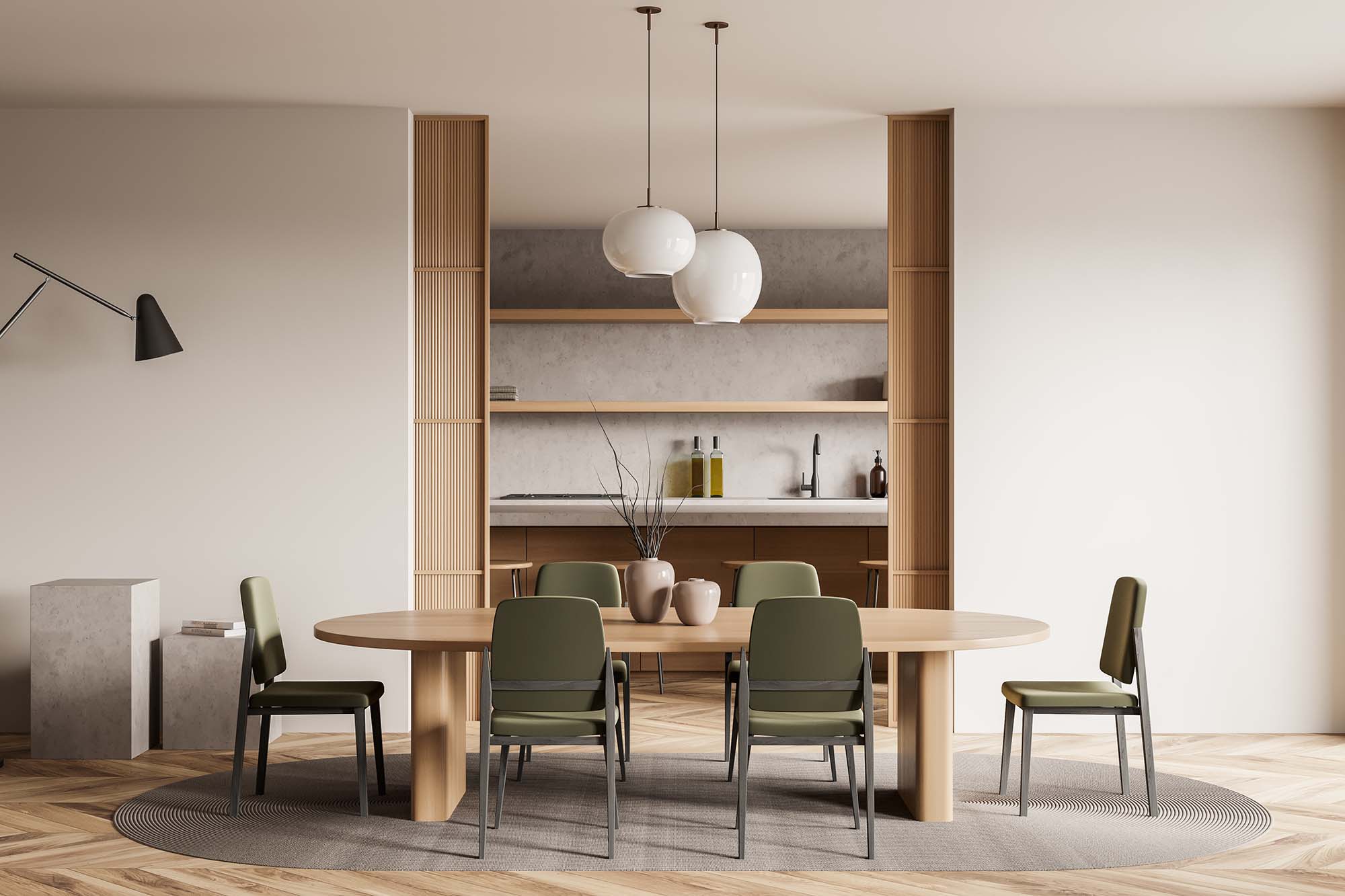
Gathering around the dinner table brings family and friends together, but the constant movement in a dining room can take a massive toll on your hardwood or laminate floors. Between sliding heavy wooden chairs back and forth during meals, tracking dirt into the seating area, and dealing with the occasional dropped fork or spilled drink, the space under your table faces constant friction.
Putting down a high-quality area rug creates an essential barrier that prevents deep scratches and dull traffic patterns from ruining your installation.
The right setup comes down to finding a balance between design aesthetics and everyday functionality. Choosing the wrong size or texture can create a permanent tripping hazard or make it difficult to pull out chairs, completely defeating the purpose of adding the extra layer of protection.
The 24-Inch Rule for Proper Sizing
The most common mistake homeowners make is buying a rug that is too small for the space. When a rug only covers the area directly under the table legs, the back wheels or legs of the chairs will catch on the edge every time someone sits down or stands up.
A dining room rug needs to extend at least 24 inches beyond the edge of the table on all sides. This extra two feet of clearance ensures that when a guest pulls their chair out to sit down, all four legs remain firmly on the rug surface. Keeping the chairs entirely on the fabric prevents the back legs from scraping against the bare wood, which is where the majority of deep floor gashes occur.
Before heading out to look at options, pull all the chairs out from your table to a comfortable distance someone would use when getting up. Measuring that outer perimeter gives you the absolute minimum rug dimensions your room can handle.
Matching Rug Shapes to Your Table Layout
Aligning the shape of your rug with the shape of your dining furniture creates a balanced, intentional look that makes the entire room feel cohesive.
Rectangular and Oval Tables
Placing a rectangular rug under a matching long table mirrors the architectural lines of the room. Parallel edges keep the paths around the perimeter clear, ensuring foot traffic flows naturally through the space without cutting across corners.
Round and Square Tables
Pairing a round table with a generous round rug creates a soft, centered focal point. A round shape works exceptionally well in smaller dining nooks or open-concept spaces because it breaks up the rigid lines of nearby kitchen counters and walls while maximizing the usable protection zone directly under the seating.
Selecting a Low-Profile, High-Density Material
The texture of the fabric matters just as much as the overall size when it comes to long-term wear and tear. High-pile shag rugs or thick, loose weaves might feel soft underfoot, but they are incredibly difficult to manage in a room dedicated to food and heavy furniture movement.
Thick fibers trap crumbs easily and resist deep vacuuming, leading to rapid staining over time. Heavy chair legs will also dig deep ruts into high-pile carpets, making it difficult for guests to slide their seats back smoothly.
Opting for a flat-weave or low-profile, tight-loop construction keeps daily maintenance simple. Flat surfaces allow chair legs to glide back and forth with zero resistance, keeping the fabric from bunching up or pulling at the seams. Tight weaves also keep food particles and spills right on top of the surface, giving you a crucial window of time to blot away a mess before it sinks down into the backing material.
Choosing a Heavy-Duty Rug Pad
Putting an area rug directly onto bare hardwood or slick luxury vinyl can cause hidden damage if you skip a proper cushion underneath. Every time someone sits down or walks across the room, the rug shifts slightly under the weight, causing the rough backing material to act like sandpaper against your floor's clear coat.
Investing in a dense, non-slip felt and rubber rug pad eliminates this hidden friction entirely.
Locking position: The rubberized side grips the hard floor without leaving a sticky residue, stopping the rug from sliding out of alignment when people push back from the table.
Absorbing weight: The thick felt layer absorbs the heavy impact of chair legs and footsteps, dispersing the pressure so it doesn't cause indentations in your planks.
Avoid cheap, waffle-weave PVC pads entirely for high-quality floors. Polyvinyl materials can react chemically with certain wood finishes and vinyl top coats, causing permanent discoloration that cannot be buffed away.
Examining Textures in Person
To find the perfect combination of size, fiber texture, and floor protection, you should see the materials in person. Operating as a family-owned business at a warehouse scale means we stock a massive selection of durable flooring solutions and accessories directly in our local showrooms.
You can physically examine different low-profile weaves, test the thickness of our commercial-grade rug pads, and get straightforward advice from local experts who understand the realities of a busy Texas home.
Visit any of our six showrooms throughout the Austin and Houston areas to explore our durable selections in person, or contact us to talk through your upcoming project.


