

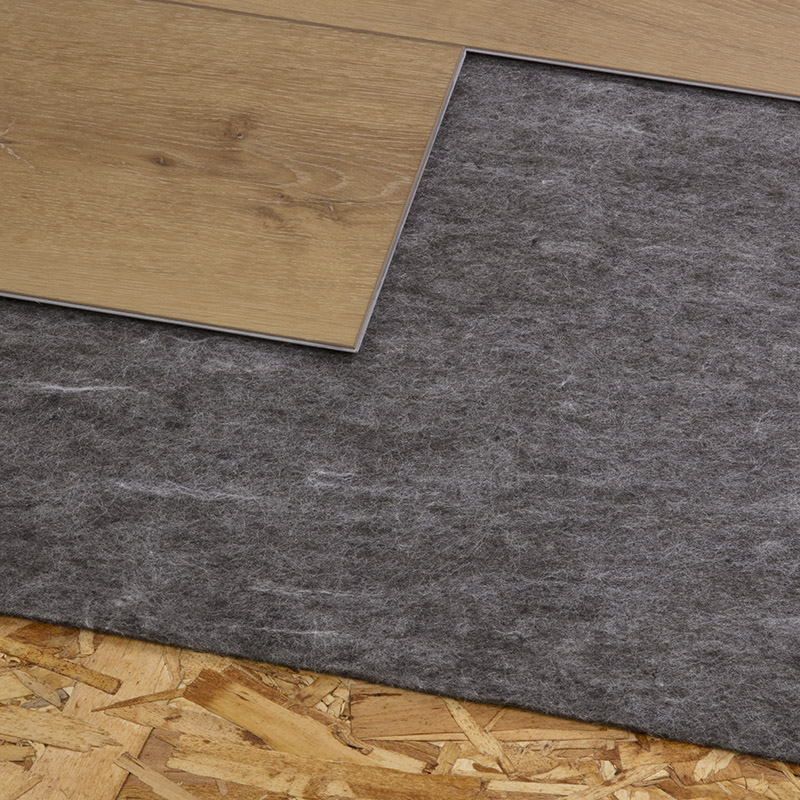
Upgrading the second floor of a Texas home from carpet to luxury vinyl plank (LVP) is a popular choice for several practical reasons. It is easier to keep clean, it handles the allergens that often get trapped in upstairs bedrooms, and it gives the entire home a cohesive, modern look. However, the acoustics may change once the soft, thick carpet and padding are removed.
In a two-story house, the flooring material on the upper level functions as the ceiling for the rooms below. Without a proper barrier, the switch to a hard surface can lead to increased noise travel and a hollow sound throughout the property. Selecting the right underlayment provides a silent, functional layer that preserves the comfort and quiet of the entire household.
The Challenge of Noise in Two-Story Texas Homes
Most two-story homes are built with wooden floor joists and a plywood or OSB subfloor for the second level. Unlike the solid concrete slabs found on the first floor, these wooden structures have air gaps between the floorboards and the drywall of the ceiling below. When you walk across a hard surface like luxury vinyl, your footsteps create vibrations that travel through the floor and echo in those gaps.
In open-concept layouts, which are very common in suburban Texas architecture, this noise can be amplified. Footsteps, the sound of a pet running across the room, or a dropped object upstairs can sound much louder to someone sitting in the living room or kitchen downstairs. When you move away from the sound-dampening qualities of carpet, the underlayment becomes the primary tool for managing these vibrations and keeping the home quiet.
How Underlayment Acts as a Sound Buffer
The primary job of a high-quality underlayment is to act as a shock absorber. Every time a foot hits the floor, energy is transferred. Without a buffer, that energy turns into a sharp "click-clack" sound on the surface and a low-frequency "thud" for the rooms underneath.
Absorbing the Impact of Footfalls
Underlayment is made from dense materials like foam, cork, or felt that are designed to compress slightly and then spring back. The compression absorbs a footfall so it doesn't produce a noise. By softening the impact, the underlayment ensures that the activity upstairs doesn't disrupt the peace and quiet of the rest of the house.
Dampening the Surface Echo
Hard surface flooring naturally reflects sound waves back into the room. This can lead to an echo that makes a bedroom feel cold or empty. The right layer underneath the vinyl helps to "ground" the floorboards. It fills the microscopic gaps between the vinyl plank and the subfloor, which stops the planks from vibrating against the plywood. This results in a floor that feels more solid underfoot and sounds more like natural hardwood rather than a hollow synthetic material.
Choosing Your Level of Quiet
When selecting luxury vinyl plank, you will notice that many products come with "attached padding." This is a layer of foam or cork already glued to the bottom of each plank. For many standard rooms, this pre-attached layer provides a baseline level of comfort and noise reduction.
For a second story where noise travel is a major concern, some homeowners choose to add a secondary underlayment. This is an additional high-density layer laid down before the vinyl is installed. A "double-layer" approach is often the best solution for families who want the maximum amount of sound control. It is important to check the manufacturer’s guidelines for your specific flooring because adding too much soft padding can sometimes put stress on the floor's locking system. High-density underlayments are usually preferred because they offer excellent sound dampening without being too "squishy."
Why Underlayment Matters for the Life of the Floor
While sound is the most noticeable benefit, the underlayment also plays a role in the structural integrity of your new floor. Most luxury vinyl uses a "click-lock" system, where the planks are held together by thin, precisely engineered joints. On a second-story plywood subfloor, there can be a small amount of "give" or deflection when you walk.
A quality underlayment provides a stable, uniform base that supports these joints. By absorbing the pressure of foot traffic, the underlayment prevents the locking system from rubbing or shifting excessively. This helps prevent the floor from developing squeaks or creaks over time. A floor that stays quiet and stable is a floor that will last much longer, protecting your investment for years to come.
Create a Quieter, More Comfortable Home with Flooring Warehouse
Transitioning to luxury vinyl on your second floor shouldn't sacrifice the peace and quiet of your home. By selecting the right underlayment, you can enjoy the beautiful look and easy maintenance of vinyl without the "hollow" noise that often comes with hard surfaces. It is a simple step that makes a massive difference in the daily experience of living in a multi-story house.
At Flooring Warehouse, we focus on providing the products that solve real problems for Texas homeowners. We understand the specific challenges of our local home designs and climates. With over one million square feet of inventory, we keep a wide range of high-performance vinyl and professional-grade underlayments in stock and ready for your project. We are a family-owned and operated business, and we take pride in standing behind our workmanship and helping our neighbors find the best solutions for their homes.
Are you ready to see how the right flooring and underlayment can transform your home? Visit one of our Texas area showrooms today to explore our massive in-stock selection, or contact us to begin your next flooring project.


